
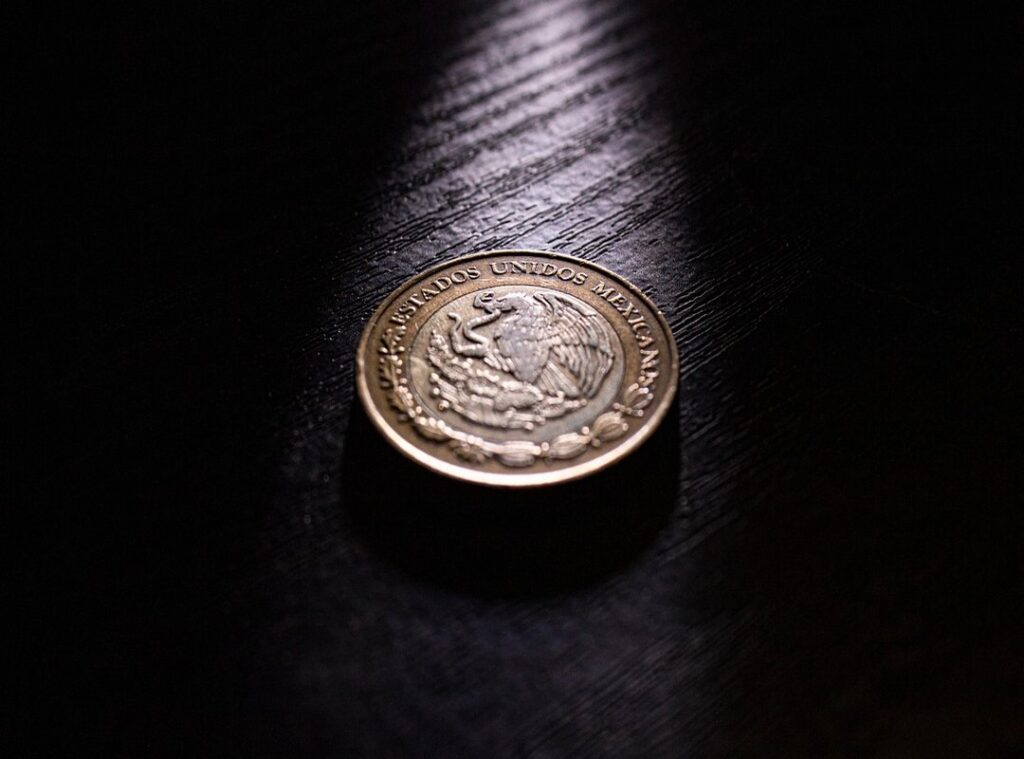
As of today, 700 Mexican Pesos is approximately 35,000 Chilean Pesos. This exchange rate isn’t set in stone and can change daily, sometimes even by the minute.
In this guide, I’ll cover why the rate fluctuates, the best ways to exchange your money, and how to avoid hidden fees. By the end, you’ll be able to confidently convert your currency and get the most value for your money.
Understanding these simple concepts can save you a significant amount on a single transaction. Let’s dive in.
What Is an Exchange Rate and Why Does It Matter?
The MXN to CLP exchange rate is the price of one currency in terms of the other. Simple, right?
You might have heard of the ‘mid-market rate.’ That’s the ‘real’ exchange rate you see on Google or XE. It’s the midpoint between what banks buy and sell currency for.
Now, here’s where it gets a bit tricky. There’s a difference between the ‘buy rate’ and the ‘sell rate’ at a currency exchange or bank. The ‘buy rate’ is what the bank will pay you for your currency, while the ‘sell rate’ is what they charge you to buy their currency.
The difference between these two rates is called the ‘spread,’ and that’s how banks make a profit.
Let me give you a clear example. If the mid-market rate is 1 MXN = 50 CLP, a bank might sell you CLP at a rate of 1 MXN = 48 CLP. They keep the difference, which is 2 CLP per MXN.
This matters a lot when converting 700 pesos mexicanos a peso chileno. The rate you are offered will almost always be worse than the mid-market rate. Your goal is to find the smallest difference.
I learned this the hard way. Once, I needed to convert some pesos for a trip. I didn’t check the mid-market rate and ended up with a much lower amount than I expected.
Lesson learned: Always check the mid-market rate before converting.
Strong currencies are more valuable, so you get more of the weaker currency when you convert. This impacts the conversion value, making it even more important to find the best rate.
Key Factors That Make the MXN/CLP Rate Change
Economic stability and growth in both Mexico and Chile play a big role. A stronger economy typically leads to a stronger currency. Simple as that.
Interest rates set by Banxico and Banco Central de Chile also matter. Higher rates attract foreign investment, which can strengthen the currency. It’s like a magnet for money.
Inflation is another key factor. High inflation in one country can devalue its currency relative to the other. Think of it this way: if your money buys less, it’s worth less.
Trade between the two nations is crucial too. If Chile imports a lot from Mexico, it increases demand for Mexican Pesos. This can potentially strengthen the MXN.
For example, 700 pesos mexicanos a peso chileno might shift based on these trade dynamics.
Political events and investor sentiment are wild cards. Uncertainty in either country can cause investors to sell off that country’s currency, weakening it. People don’t like risk, and they vote with their wallets.
Think of currency values like stock prices. They go up and down based on the ‘health’ of the country’s economy. Just like you’d want to invest in a thriving company, you’d want to hold a strong, stable currency. 700 pesos mexicanos a peso chileno
The Best Ways to Exchange Your Currency: A Step-by-Step Comparison

When it comes to exchanging your currency, you’ve got a few options. Let’s break them down.
Method 1: Online Money Transfer Services (e.g., Wise, Remitly)
These services often offer the best rates and low fees. They’re super convenient too. But you do need to set up an account, and transfer times can vary.
It’s not always instant, but usually worth the wait.
Method 2: Traditional Banks
Banks are secure and familiar. You know what you’re getting. However, they typically have poor exchange rates and high transfer fees.
This is often the most expensive option. I’d avoid it if you can.
Method 3: Currency Exchange Bureaus (‘Casas de Cambio’)
You get instant cash, which is great in a pinch. But the rates can vary wildly, especially at airports. Airports should be avoided if possible.
The convenience comes at a cost.
Method 4: Using a Debit/Credit Card Abroad
Using your card abroad is easy. Just make sure to avoid ‘Dynamic Currency Conversion’ (DCC). Always choose to pay in the local currency (CLP).
It’ll save you money in the long run.
Mini-Checklist
- Check the mid-market rate.
- Compare total costs (rate + fees) across 2-3 services.
- Choose the best option for your needs (speed vs. cost).
For example, if you’re converting 700 pesos mexicanos a peso chileno, you’ll want to follow these steps to get the best deal. It’s not always clear-cut, but with a bit of research, you can make the right choice.
Common Pitfalls to Avoid When Converting Pesos
When converting 700 pesos mexicanos a peso chileno, or any other currency, it’s easy to fall into traps that can cost you. Here’s what to watch out for.
Airport exchange kiosks. These have notoriously bad exchange rates and high fees. Only use them if you absolutely need a small amount of cash.
Hidden fees. A ‘zero fee’ or ‘no commission’ offer usually means the provider is making money through a poor exchange rate. Always calculate the final amount you will receive.
Dynamic Currency Conversion (DCC). This is a trap when using cards abroad. If a terminal asks if you want to pay in your home currency (MXN) or local currency (CLP), always choose local (CLP) to get a better rate from your bank.
Exchanging too much cash. Carrying large amounts of physical currency isn’t safe and often digital transfers provide better value and security. Stick to smaller amounts for emergencies.
Getting the Most Value for Your 700 Pesos
The final amount of Chilean Pesos you receive for your 700 pesos mexicanos a peso chileno depends heavily on the method you choose. Always compare the final amount you’ll receive after all fees and rate markups. This is the most critical step to ensure you get the best value.
Before you convert, take two minutes to check an online converter and compare it to at least two services—it’s the quickest way to save money.
 Anthony Currieronalds is the kind of writer who genuinely cannot publish something without checking it twice. Maybe three times. They came to gamer gear optimization tricks through years of hands-on work rather than theory, which means the things they writes about — Gamer Gear Optimization Tricks, Insider Tips, Virtual World Exploration and Lore, among other areas — are things they has actually tested, questioned, and revised opinions on more than once.
That shows in the work. Anthony's pieces tend to go a level deeper than most. Not in a way that becomes unreadable, but in a way that makes you realize you'd been missing something important. They has a habit of finding the detail that everybody else glosses over and making it the center of the story — which sounds simple, but takes a rare combination of curiosity and patience to pull off consistently. The writing never feels rushed. It feels like someone who sat with the subject long enough to actually understand it.
Outside of specific topics, what Anthony cares about most is whether the reader walks away with something useful. Not impressed. Not entertained. Useful. That's a harder bar to clear than it sounds, and they clears it more often than not — which is why readers tend to remember Anthony's articles long after they've forgotten the headline.
Anthony Currieronalds is the kind of writer who genuinely cannot publish something without checking it twice. Maybe three times. They came to gamer gear optimization tricks through years of hands-on work rather than theory, which means the things they writes about — Gamer Gear Optimization Tricks, Insider Tips, Virtual World Exploration and Lore, among other areas — are things they has actually tested, questioned, and revised opinions on more than once.
That shows in the work. Anthony's pieces tend to go a level deeper than most. Not in a way that becomes unreadable, but in a way that makes you realize you'd been missing something important. They has a habit of finding the detail that everybody else glosses over and making it the center of the story — which sounds simple, but takes a rare combination of curiosity and patience to pull off consistently. The writing never feels rushed. It feels like someone who sat with the subject long enough to actually understand it.
Outside of specific topics, what Anthony cares about most is whether the reader walks away with something useful. Not impressed. Not entertained. Useful. That's a harder bar to clear than it sounds, and they clears it more often than not — which is why readers tend to remember Anthony's articles long after they've forgotten the headline.