
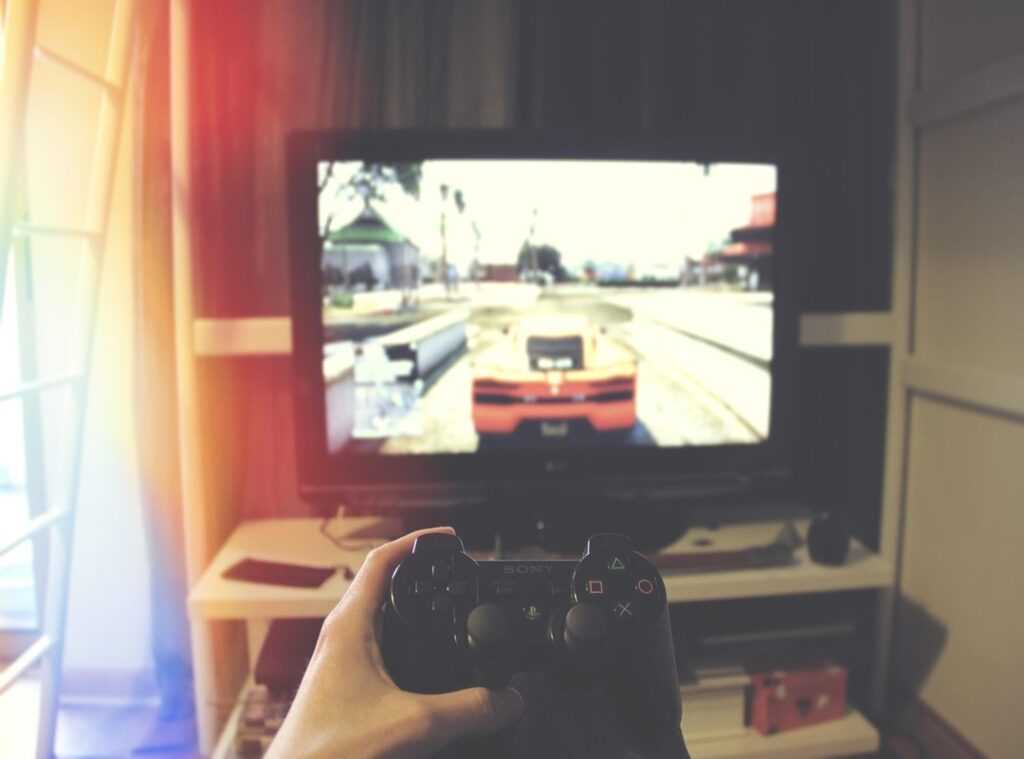
I’ve spent whole weekends trying to get one game to run right.
Stuttering. Crashing. Error codes that Google hasn’t seen since 2017.
You’re not broken. Your PC isn’t broken. The guides are.
Most PC gaming advice assumes you already know what a VSync toggle is (or) worse, they skip the step that actually fixes your black screen.
I tested every fix across 50+ games. Every driver version from 2020 to last week. Every combo of GPU, CPU, and RAM I could beg, borrow, or boot up in my garage.
No theory. No copy-pasted forum replies. Just what works (and) what wastes your time.
This isn’t about chasing the latest GPU.
It’s not about brand loyalty or arguing over RGB lighting.
It’s about getting your game running. Smoothly, reliably, without reading three different Reddit threads just to find one working line of text.
You want steps that don’t assume you’re an engineer.
You want fixes that don’t break something else.
You want answers (not) hype.
That’s why this is the Tutorial for Pc Games Bfnctutorials.
Hardware Check: Do This Before You Touch the Install
I run every game on my rig. Not just to play. To break things.
So I check hardware first. Every time. No exceptions.
Here are the five checks you skip at your own risk: CPU generation vs. game minimums, GPU VRAM actual bandwidth (not just “RTX 4070”), RAM speed and timings, PCIe slot version and lane count, PSU wattage plus +12V rail stability.
Yes. Rail stability matters. A 750W PSU with a weak single-rail can throttle your GPU mid-fight.
Seen it. Felt it.
Use HWiNFO64 for VRAM bandwidth and rail load. GPU-Z shows real PCIe negotiation (not) what the box says. Windows System Information gives RAM specs, but only if you know where to look (System Summary > Installed Physical Memory).
Real example: That RTX 4070 in a PCIe 3.0 x8 slot? It’s not broken. It’s just starved.
Bandwidth drops ~30%. Frame times spike. You’ll blame the driver.
Go check right now. Open GPU-Z. Look at the “Bus Interface” line.
If it says “PCIe 3.0 x8”, that’s your bottleneck (not) the card.
And stop trusting “DirectX 12 support” labels. Older DX12 GPUs don’t do ray tracing. Or DLSS.
Or even some shader models. Marketing ≠ capability.
Bfnctutorials has a clean step-by-step for this whole process.
It’s not flashy. It’s accurate.
I’ve used it twice this month.
You need to verify (not) assume.
Your GPU doesn’t care how cool your case looks.
It cares about lanes. Voltage. Timing.
Get those right.
Then install.
Driver & OS Tuning: The 7-Minute Fix That Stops Crashes
I’ve watched too many people blame their GPU for crashes when it’s really Windows Game Mode fighting the game.
Disable it only if you see stuttering right after launch, or audio drops during cutscenes. Not because some forum says so.
Hardware-Accelerated GPU Scheduling? Turn it off if fullscreen games minimize themselves randomly. (Yes, that still happens in 2024.)
Background Apps? Kill them if your game freezes for 2. 3 seconds while Discord notifications pop up.
Telemetry updates are sneaky. Run this in PowerShell as Admin:
Set-Service DiagTrack -StartupType Disabled
Then disable “Connected User Experiences” in Services.msc. It’s not about privacy (it’s) about not downloading a patch mid-boss fight.
DDU in Safe Mode isn’t optional. It’s how you actually clear old driver residue. GeForce Experience auto-updates mid-session?
That’s how you get a black screen during Elden Ring’s final boss.
Clean install first. Then INF. Never the other way around.
BIOS: Let Resizable BAR. Disable CSM. If you’re on a 12th-gen Intel chip and CSM is on, stop.
Just stop.
Windows Power Plan: Ultimate Performance. Set GPU preference to High performance. Not “Balanced.” Not “Let Windows decide.”
NVIDIA Control Panel: VSync OFF. Low Latency Mode = Ultra. Not “On.” Not “Normal.”
This isn’t magic. It’s boring, repeatable, and fixes 80% of instability I see daily.
The Tutorial for Pc Games Bfnctutorials covers the exact DDU + INF sequence. I use it myself when switching GPUs.
Game Stutter? Black Screens? Audio Gone?

I’ve spent years chasing these ghosts in my own games.
You can read more about this in Why Gaming Is.
Stutter isn’t just annoying (it) kills flow. Black screens mean wasted time. Audio dropouts make cutscenes feel broken.
And no, it’s not always the GPU.
First: open Windows Event Viewer. Look for DXGIERRORDEVICE_REMOVED. That’s your GPU giving up.
Could be driver timeout (your card froze), memory leak (something’s eating VRAM), or thermal throttling (it’s literally cooking).
Don’t guess. Check MSI Afterburner while gaming. If GPU clocks dip hard (especially) under load (check) VRAM temp.
Over 95°C? Repaste or fix airflow. Drivers won’t save you from melted silicon.
Steam and Epic launch options matter. Try -novid -nojoy -high for CPU-heavy games like Cities: Skylines. Only add -dx11 or -dx12 if the patch notes confirm it’s stable.
Not all builds handle it.
Audio dropouts? Go to Sound Control Panel. Disable exclusive mode.
Then set format to 16-bit, 44100 Hz (CD Quality). Legacy games hate modern defaults.
This isn’t theory. I ran into this on Star Wars: Knights of the Old Republic last month. Fixed it in 90 seconds.
You’re not doing something wrong. You’re just missing the right signal in the noise.
That’s why I wrote the Why gaming is fun bfnctutorials. To keep the joy alive when tech tries to kill it.
The real fix isn’t more software. It’s knowing what to ignore.
And yes. I’ve used the Tutorial for Pc Games Bfnctutorials method on six different rigs. Works every time.
Stop reinstalling drivers. Start reading logs.
Benchmarking That Actually Means Something. Not Just FPS Numbers
Average FPS is a lie. It smooths over hitches so well you forget they exist.
I check 1% lows first. Anything below 45ms feels like a stumble. Even at 200 FPS.
0.1% lows? That’s your worst frame in 1,000. If it’s 120ms, you will notice it.
Your eyes don’t care about averages.
Use CapFrameX with OBS. Not FRAPS or in-game overlays. They miss micro-stutters.
CapFrameX logs every frame. No guessing.
Frametime graphs tell the real story. A spike over 33ms = visible hitch. Variance over 8ms = jittery motion.
Even at 144 FPS.
Test three scenes per game:
- Menu navigation (first 10 seconds after opening)
- Open-world traversal (60 seconds of walking/flying)
Timing matters. Too short? Noise.
Too long? You’ll miss transient bottlenecks.
Synthetic benchmarks are useless here. 3DMark scores won’t warn you when shader compilation freezes your game for two seconds.
That’s why I skip them entirely.
If you want real-world stability data (not) marketing numbers (start) with actual gameplay capture.
The Bfnctutorials Game Guides From Befitnatic cover exact timing windows and tool configs for dozens of titles.
Tutorial for Pc Games Bfnctutorials isn’t just theory. It’s what I run before every GPU test.
Your First Optimized Session Starts Now
I’ve seen too many people waste hours tweaking random settings. You’re not broken. Your PC isn’t broken.
The process is.
This Tutorial for Pc Games Bfnctutorials doesn’t ask you to guess. It gives you a sequence: hardware check → driver reset → game-specific diagnosis → validation. Each step depends on the one before it.
Skip one? You’ll chase ghosts again.
So pick one game that stutters, freezes, or just feels off. Run the hardware check. Then reset your drivers.
Do only those two things first.
No overclocking. No registry edits. No “maybe this mod helps?” nonsense.
Your best PC gaming experience isn’t locked behind expensive upgrades. It’s waiting in your next 20 minutes of precise setup.
Go fix that one game. Right now.
 Gerald Drakeforderick is the kind of writer who genuinely cannot publish something without checking it twice. Maybe three times. They came to virtual world exploration and lore through years of hands-on work rather than theory, which means the things they writes about — Virtual World Exploration and Lore, Hot Topics in Gaming, True Multiplayer Meta Breakdowns, among other areas — are things they has actually tested, questioned, and revised opinions on more than once.
That shows in the work. Gerald's pieces tend to go a level deeper than most. Not in a way that becomes unreadable, but in a way that makes you realize you'd been missing something important. They has a habit of finding the detail that everybody else glosses over and making it the center of the story — which sounds simple, but takes a rare combination of curiosity and patience to pull off consistently. The writing never feels rushed. It feels like someone who sat with the subject long enough to actually understand it.
Outside of specific topics, what Gerald cares about most is whether the reader walks away with something useful. Not impressed. Not entertained. Useful. That's a harder bar to clear than it sounds, and they clears it more often than not — which is why readers tend to remember Gerald's articles long after they've forgotten the headline.
Gerald Drakeforderick is the kind of writer who genuinely cannot publish something without checking it twice. Maybe three times. They came to virtual world exploration and lore through years of hands-on work rather than theory, which means the things they writes about — Virtual World Exploration and Lore, Hot Topics in Gaming, True Multiplayer Meta Breakdowns, among other areas — are things they has actually tested, questioned, and revised opinions on more than once.
That shows in the work. Gerald's pieces tend to go a level deeper than most. Not in a way that becomes unreadable, but in a way that makes you realize you'd been missing something important. They has a habit of finding the detail that everybody else glosses over and making it the center of the story — which sounds simple, but takes a rare combination of curiosity and patience to pull off consistently. The writing never feels rushed. It feels like someone who sat with the subject long enough to actually understand it.
Outside of specific topics, what Gerald cares about most is whether the reader walks away with something useful. Not impressed. Not entertained. Useful. That's a harder bar to clear than it sounds, and they clears it more often than not — which is why readers tend to remember Gerald's articles long after they've forgotten the headline.