
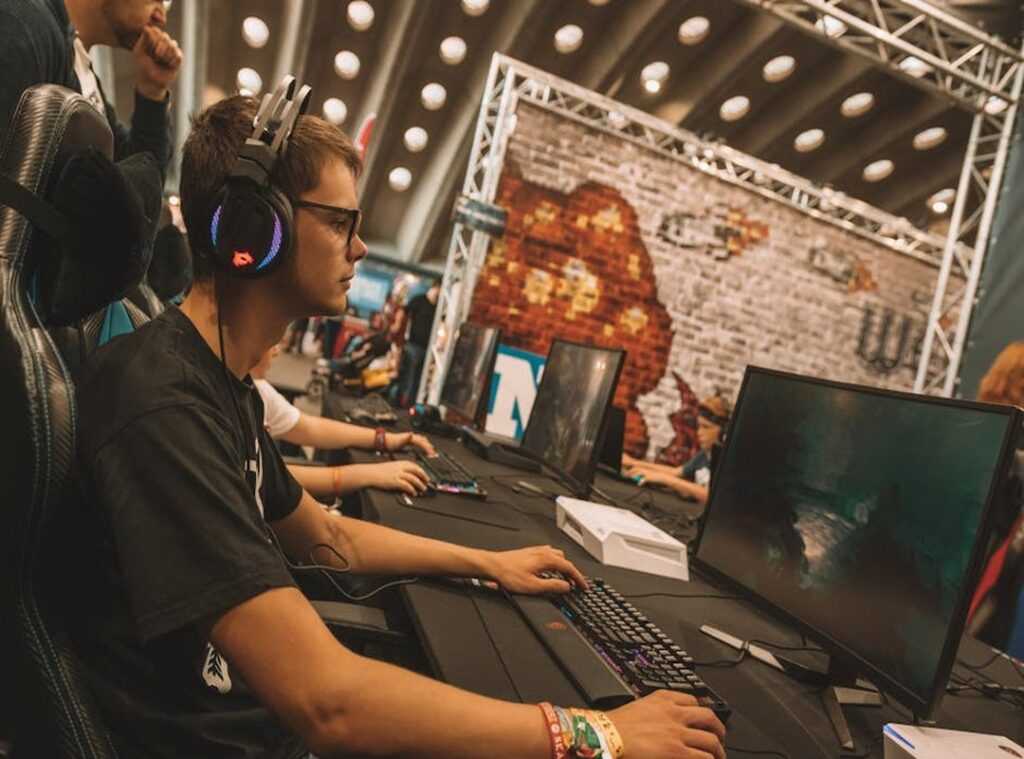
You just downloaded that new game.
You clicked play.
Then. Crash. Or stutter.
Or you stared at a settings menu like it was written in Sanskrit.
I’ve seen this exact moment hundreds of times.
Same frustration. Same confusion. Same “why won’t this just work?” feeling.
Here’s the truth: PC gaming shouldn’t require a computer science degree.
Yet most advice is either too vague (“just update your drivers”) or too technical (“adjust your VSync triple-buffering latency flag”).
I’ve sat with real people. Watched them struggle. Fixed their rigs (old) laptops, budget builds, ten-year-old desktops, brand-new RTX monsters.
No assumptions. No jargon without explanation. No skipping steps because “you should already know.”
This isn’t theory. It’s what works right now on actual hardware.
You’ll get clear steps. Visual cues. Real settings to change (not) just “improve for performance.”
No fluff. No filler. Just games running smoothly.
And if something does go wrong? I’ll show you how to read the error (not) guess.
This is Pc Gaming Bfnctutorials. Built for people who want to play, not debug.
Gaming PC Check: 4 Specs That Actually Matter
I check these four things every time. Before I even open Steam.
GPU model. Not just “NVIDIA” or “AMD.” The exact chip. RTX 4070 is not the same as RTX 4070 Ti.
(Yes, that matters.)
CPU generation. An i5-9400F struggles where an i5-12400F breathes. Older cores bottleneck modern GPUs hard.
VRAM. 8GB isn’t enough for Cyberpunk 2077 at Ultra. 12GB is the real floor now. Don’t trust the box label. Check it yourself.
RAM speed and capacity. 16GB DDR4-3200 is bare minimum. 32GB DDR5-5600? That’s where you stop waiting for textures.
How do you check all this? No third-party tools.
Open Task Manager → Performance tab. CPU and RAM are right there.
Type msinfo32 in Start. Look for “System Model” and “Installed Physical Memory.”
Right-click desktop → NVIDIA Control Panel or AMD Radeon Software → System → Graphics Card. That’s your GPU and VRAM.
Don’t assume “it runs” means “it runs well.” I’ve seen Baldur’s Gate 3 chug on a $2,000 rig because drivers were three versions old.
This guide walks through each step live. It’s part of the Pc Gaming Bfnctutorials series. But skip the fluff and go straight to the checks.
Stability > benchmark scores. Always.
You’re not done until you’ve verified all four.
Then. And only then (hit) Play.
In-Game Settings Decoded: What Each Option Actually Does
Resolution Scale is the first thing I change. It renders the game at a lower resolution, then upscales. You get more FPS with minimal blur (especially) on RTX 40-series cards.
Set it to 90% on a GTX 1660. 100% on an RTX 4070. Anything over 100% is wasted unless you’re on a 4K OLED and love pixel-peeping.
VSync stops screen tearing. But it adds input lag. I turn it off unless my frame rate wildly exceeds my monitor’s refresh rate.
Frame Rate Cap matters most for consistency. Cap at your monitor’s refresh rate (or) 5 below if you want headroom. Stutters?
Check this first.
Texture Quality eats VRAM fast. Low-end GPU? Drop it to Medium.
Mid-tier? High is fine. High-end?
Max it. Blurry textures? This is usually why.
Shadows are brutal on performance. Low shadows give you clean FPS gains. High shadows look great.
But only if your GPU can hold the frame time steady.
Anti-Aliasing smooths jagged edges. TAA is your friend. MSAA?
Skip it unless you’re running 1080p on an old card.
Stutters point to frame time spikes. Not just low FPS. Open MSI Afterburner.
Watch 1% lows. If they dip hard, cap your FPS or lower shadows.
Blurry textures? Texture Quality or Resolution Scale. Input lag?
VSync or frame cap too high.
I’ve debugged hundreds of setups. Most people waste time tweaking AA before fixing Resolution Scale.
Pc this guide helped me spot that pattern early.
You’re not broken. Your settings are.
Black Screen? Stuttering? DX Errors? Fix It Yourself.
I’ve seen every one of these issues. On my own rig, on friends’ machines, in Discord DMs at 2 a.m.
Black screen on launch? Don’t panic. Boot into Safe Mode, roll back your GPU driver to the last stable version.
Not the “latest” one (the) one that actually worked. NVIDIA and AMD both love pushing broken updates.
Stuttering mid-game? Windows Game Mode is often the culprit. Go to Settings > Gaming > Game Mode and turn it off.
Also check Background Apps. Yes, even Spotify or Discord can hijack CPU cycles when you’re not looking.
DX11/DX12 errors? Visual C++ Redistributables are usually the problem. Reinstall the 2015. 2022 x64 package.
Even if it says it’s already installed. Same with .NET System 4.8. Don’t trust the version number shown in Programs and Features.
Download fresh from Microsoft.
Steam’s “Verify Integrity” fails sometimes. Then you dig deeper: look for missing .dll files in the game’s folder, check file timestamps, compare against a clean install on another PC. Epic and Ubisoft Connect don’t show errors (they) just hang.
You have to watch Task Manager while launching.
Gaming Bfnctutorials has step-by-step screenshots for all of this. Not theory, just what to click and when.
You don’t need tech support for this stuff.
Most of it takes under ten minutes.
And no, updating Windows “just in case” won’t fix it. It’ll probably break something else.
I’ve done that too.
Free Tools That Actually Move the Needle
MSI Afterburner + RivaTuner Statistics Server is the only monitoring combo you need. Not three tools. Not five.
Just this one pair.
I watch GPU usage %, temps, and frametimes. Not just FPS. Because 60 FPS means nothing if half the frames take 40ms to render (hello, stutter).
You’re probably staring at that overlay right now wondering what “frametime” even means. It’s how long each frame takes to draw. Lower and steadier = smoother.
Period.
QuickCPU? Yes. Use it.
Slide CPU max frequency to 95% for gaming. For streaming, drop it to 85% and raise minimum to 30%. Reversible.
Safe. No registry edits. No reboot.
LatencyMon finds audio crackle and video sync drift before you even notice them. If it shows DPC latency over 10,000 µs, your USB audio interface or antivirus is likely hogging the bus.
No overclocking. No sketchy batch files. No “tweaking guides” promising 20% gains.
Just real data. Real fixes. Real stability.
That’s how you get actual headroom (not) hype.
If you want deeper walkthroughs on making these tools work together, check out the this page. They cover exactly this (no) fluff, no filler.
Pc Gaming Bfnctutorials isn’t about theory. It’s about what works today.
Start Playing. Not Troubleshooting. Tonight
I’ve been there. Staring at settings menus for 47 minutes. Missing the first boss fight because I couldn’t get 60 fps.
You don’t need to understand every slider. You just need to know which one to flip before you launch.
Run the 5-minute foundation check before your next install. Apply the In-Game Settings Decoded section to one game you own but haven’t played yet. That’s it.
No overhaul. No theory. Just one change that works.
Most guides drown you in options. Pc Gaming Bfnctutorials cuts to what moves the needle.
Your best gaming session starts with knowing what to change (not) guessing.
Go open that game right now. Tweak just the resolution + VSync line. Launch.
Feel the difference? That’s not luck. That’s you finally in control.
 Gerald Drakeforderick is the kind of writer who genuinely cannot publish something without checking it twice. Maybe three times. They came to virtual world exploration and lore through years of hands-on work rather than theory, which means the things they writes about — Virtual World Exploration and Lore, Hot Topics in Gaming, True Multiplayer Meta Breakdowns, among other areas — are things they has actually tested, questioned, and revised opinions on more than once.
That shows in the work. Gerald's pieces tend to go a level deeper than most. Not in a way that becomes unreadable, but in a way that makes you realize you'd been missing something important. They has a habit of finding the detail that everybody else glosses over and making it the center of the story — which sounds simple, but takes a rare combination of curiosity and patience to pull off consistently. The writing never feels rushed. It feels like someone who sat with the subject long enough to actually understand it.
Outside of specific topics, what Gerald cares about most is whether the reader walks away with something useful. Not impressed. Not entertained. Useful. That's a harder bar to clear than it sounds, and they clears it more often than not — which is why readers tend to remember Gerald's articles long after they've forgotten the headline.
Gerald Drakeforderick is the kind of writer who genuinely cannot publish something without checking it twice. Maybe three times. They came to virtual world exploration and lore through years of hands-on work rather than theory, which means the things they writes about — Virtual World Exploration and Lore, Hot Topics in Gaming, True Multiplayer Meta Breakdowns, among other areas — are things they has actually tested, questioned, and revised opinions on more than once.
That shows in the work. Gerald's pieces tend to go a level deeper than most. Not in a way that becomes unreadable, but in a way that makes you realize you'd been missing something important. They has a habit of finding the detail that everybody else glosses over and making it the center of the story — which sounds simple, but takes a rare combination of curiosity and patience to pull off consistently. The writing never feels rushed. It feels like someone who sat with the subject long enough to actually understand it.
Outside of specific topics, what Gerald cares about most is whether the reader walks away with something useful. Not impressed. Not entertained. Useful. That's a harder bar to clear than it sounds, and they clears it more often than not — which is why readers tend to remember Gerald's articles long after they've forgotten the headline.