
If you’re diving into a new game or looking to sharpen your competitive edge, you need more than surface-level tips—you need clarity on what actually drives performance. This article is built to meet that need head-on. Whether you’re trying to master combat rotations, understand multiplayer meta shifts, or fine-tune your gear for maximum efficiency, we break everything down into practical, actionable insights you can apply immediately.
At the center of this guide is a detailed core gameplay mechanics guide exactly as it is given, designed to help you understand how systems interact, where most players make mistakes, and how small adjustments can dramatically improve results. We’ve analyzed current meta trends, tested optimization strategies, and cross-referenced in-game data to ensure accuracy.
By the end, you’ll not only understand how the game works—you’ll know how to make it work for you.
Beyond the Tutorial: Mastering the Unspoken Rules of Gaming
I remember grinding ranked matches for weeks, blaming my aim, my build, even my teammates (classic, right?). The truth? I’d ignored the fundamentals.
Elite players across FPS, RPGs, and strategy titles share four pillars:
- Awareness (tracking space, cooldowns, and intent)
- Decision-making (choosing optimal risk vs. reward)
- Resource control (health, ammo, economy, time)
- Adaptation (adjusting faster than opponents)
Many argue mechanics alone carry games. I disagree. Mechanics are execution; thinking wins championships (just watch any clutch esports final). Treat this as your core gameplay mechanics guide—and start reviewing your own replays tonight.
Situational Awareness: The Art of Seeing the Whole Game
Situational awareness is the ability to process critical information beyond what your character immediately sees. In other words, it’s zooming out mentally while still playing moment to moment. While mechanical skill (like aiming or fast clicks) matters, awareness often determines who actually wins. Think of it as playing chess while others are playing checkers.
The Minimap Is Your Brain
First and foremost, treat the minimap as a live data feed. In MOBAs, constant glances reveal enemy rotations, jungle paths, and objective timers like Dragon or Baron. In RTS titles, it shows troop movements and expansion attempts before they become full-blown threats. Training yourself to scan every few seconds turns surprise attacks into predictable plays. Pro tip: build a habit loop—check the minimap after every last hit or unit command.
Audio Cues as Intelligence
Meanwhile, sound design acts as invisible radar. Footsteps in FPS games pinpoint enemy distance and surface type (metal versus concrete). In MMOs, distinct ability activation sounds warn you of incoming ultimates. Even subtle environmental shifts—like a door creaking open—signal danger. Lowering music and boosting effects volume can dramatically improve reaction time.
Positioning as a Weapon
Finally, positioning controls outcomes. High ground often grants vision advantages; cover reduces exposure; chokepoints funnel enemies into predictable paths. Controlling space forces mistakes. Many core gameplay mechanics guide discussions emphasize aim—but in practice, space control wins fights (just ask any Overwatch tank main).
Action Economy: Making Every Second and Click Count
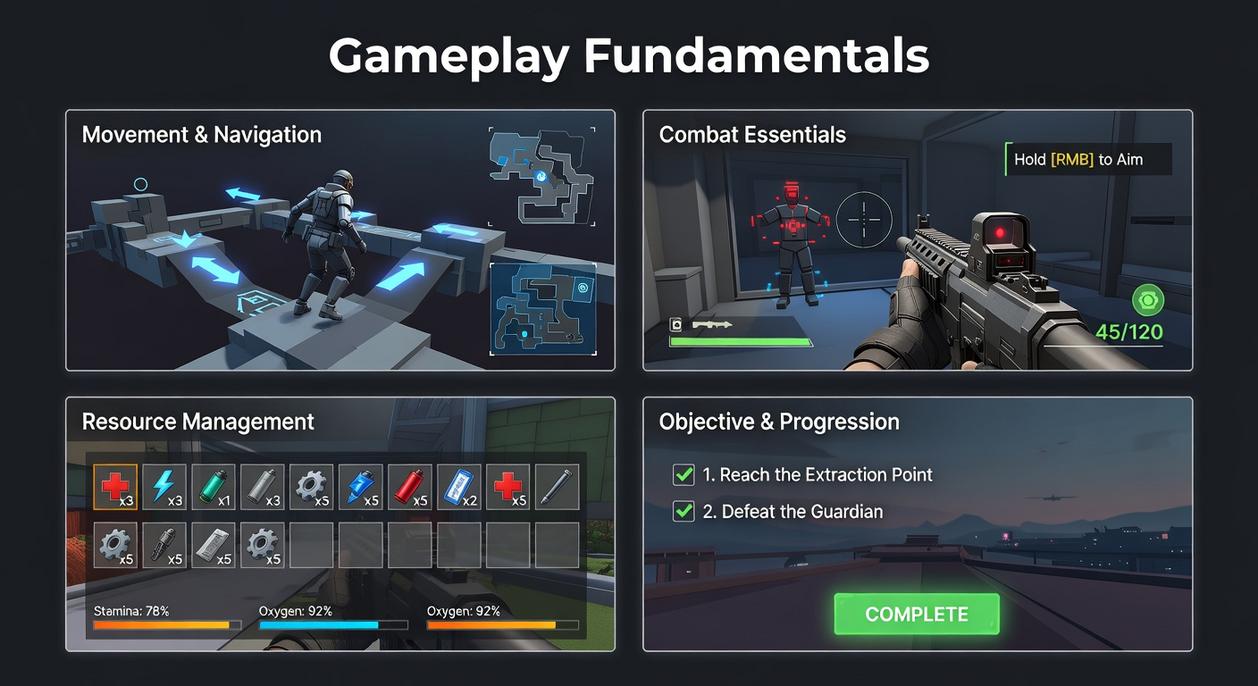
Action Economy is the total number of meaningful actions a player can take within a given timeframe. “Meaningful” is the key word. Reloading at the right moment? Meaningful. Panic-jumping into a wall? Not so much. In competitive games, the player who extracts more value per second often wins—even if they press fewer buttons.
Every action should create pressure, advantage, or information. That’s the heartbeat of strong play.
Cooldown Management
Using an ability on cooldown means activating it immediately once it’s ready. Saving it means holding for a high-impact window—like a team fight or boss phase. Resource management (mana, stamina, ammo) directly affects this choice. Blow all your mana early and you’re a spectator later (we’ve all been there).
A quick breakdown:
- On cooldown: Maximizes uptime and steady pressure.
- Saved timing: Maximizes burst impact and swing potential.
The benefit? Better control over tempo and fewer wasted opportunities.
APM Isn’t Everything
APM (Actions Per Minute) measures speed. But EAPM (Effective Actions Per Minute) measures impact. Spamming build commands in an RTS looks impressive; landing one decisive flank wins the match. Think quality over quantity—like a speedrunner who skips fluff and hits only what matters.
The Value of Inaction
Sometimes the best move is restraint. Holding an angle in a shooter, baiting an opponent’s cooldown, or conserving ammo for overtime creates leverage. Strategic patience turns time into a weapon.
If you want to sharpen this instinct, study any solid core gameplay mechanics guide and analyze why top players wait when others rush. Timing isn’t passive—it’s precision.
Risk vs. Reward: The Core of Strategic Decision-Making
Every meaningful decision in a game comes down to one question: is the potential reward worth the risk? In simple terms, risk vs. reward is the calculation of what you might gain versus what you could lose. Sounds obvious, right? Yet how often have you chased a low-health enemy only to get ambushed and throw the match?
First, consider aggressive vs. passive play. Aggressive play means pushing an advantage—like engaging right after an enemy burns a key cooldown (a powerful ability with limited uptime). Passive play, on the other hand, focuses on minimizing losses and waiting for a better window. So ask yourself: are you attacking because the odds favor you, or because you’re impatient? Sometimes restraint wins more games than flashy mechanics.
However, not everyone agrees. Some players argue constant pressure keeps opponents reactive. That’s true—to a point. But uncalculated aggression often hands over shutdown gold or map control (and nobody wants to be the highlight in someone else’s montage).
Then there’s objective trading: conceding a minor objective to secure a major one. Would you rather defend a low-value tower, or trade it for a boss buff that swings the entire match?
Finally, information gathering. Peeking a corner in an FPS or sending a scout in an RTS carries risk—but what’s the cost of staying blind? Smart players treat intel as an investment, a principle emphasized in any solid core gameplay mechanics guide and in the top 10 advanced gaming strategies for competitive players.
The Human Element: Playing the Opponent, Not Just the Game
Great players don’t just master mechanics—they master people. The psychological layer of gaming is about prediction, conditioning, and exploitation.
Pattern Recognition is Player A reacting on instinct vs. Player B tracking habits. Does your opponent reload after every duel? Push the same flank? Spot it, punish it. (Yes, even that “unpredictable” friend has tells.)
Conditioning and Baiting flips the script. A vs. B again: A throws random heavy attacks; B repeats light pokes to lull you—then lands a finisher. Creating a false pattern forces mistakes.
Meta-Gaming Awareness is strategy vs. counter-strategy. Follow the meta flawlessly—or study it through a core gameplay mechanics guide and dismantle it piece by piece.
- Predict habits
- Break expectations
- Counter the meta
That’s how you play the opponent, not just the game.
From Knowledge to Instinct: Applying These Fundamentals
You now have the blueprint for awareness, efficiency, and strategy—the pillars behind high-level play. Yet many players argue mechanics alone win matches. However, grinding aim trainers without context often stalls progress.
Instead, use a core gameplay mechanics guide to identify measurable behaviors: minimap checks every 5 seconds, resource spend under 90% cap, cooldown tracking before engagements. These are features you can track, review, and refine.
Because these fundamentals are game-agnostic, they accelerate adaptation to titles and metas. So, pick one—minimap awareness—and focus on it for five matches. Conscious repetition turns knowledge into instinct.
Master Your Next Match with Confidence
You came here to sharpen your skills and gain a clearer edge in your favorite games—and now you have the insights to do exactly that. From smarter loadout decisions to tighter rotations and meta-aware tactics, you’re no longer guessing your way through matches.
The frustration of inconsistent wins, wasted gear builds, and falling behind the current meta doesn’t have to continue. With this core gameplay mechanics guide, you now understand how to optimize performance, adapt faster, and play with purpose instead of panic.
Now it’s time to act. Jump back into your game, apply one new strategy immediately, and refine your build using the optimization tips you’ve learned. Thousands of competitive players rely on our breakdowns to stay ahead of shifting metas and dominate their lobbies.
Don’t just play—outplay. Dive into your next match with a plan, execute with precision, and turn knowledge into consistent victories starting today.
 Gerald Drakeforderick is the kind of writer who genuinely cannot publish something without checking it twice. Maybe three times. They came to virtual world exploration and lore through years of hands-on work rather than theory, which means the things they writes about — Virtual World Exploration and Lore, Hot Topics in Gaming, True Multiplayer Meta Breakdowns, among other areas — are things they has actually tested, questioned, and revised opinions on more than once.
That shows in the work. Gerald's pieces tend to go a level deeper than most. Not in a way that becomes unreadable, but in a way that makes you realize you'd been missing something important. They has a habit of finding the detail that everybody else glosses over and making it the center of the story — which sounds simple, but takes a rare combination of curiosity and patience to pull off consistently. The writing never feels rushed. It feels like someone who sat with the subject long enough to actually understand it.
Outside of specific topics, what Gerald cares about most is whether the reader walks away with something useful. Not impressed. Not entertained. Useful. That's a harder bar to clear than it sounds, and they clears it more often than not — which is why readers tend to remember Gerald's articles long after they've forgotten the headline.
Gerald Drakeforderick is the kind of writer who genuinely cannot publish something without checking it twice. Maybe three times. They came to virtual world exploration and lore through years of hands-on work rather than theory, which means the things they writes about — Virtual World Exploration and Lore, Hot Topics in Gaming, True Multiplayer Meta Breakdowns, among other areas — are things they has actually tested, questioned, and revised opinions on more than once.
That shows in the work. Gerald's pieces tend to go a level deeper than most. Not in a way that becomes unreadable, but in a way that makes you realize you'd been missing something important. They has a habit of finding the detail that everybody else glosses over and making it the center of the story — which sounds simple, but takes a rare combination of curiosity and patience to pull off consistently. The writing never feels rushed. It feels like someone who sat with the subject long enough to actually understand it.
Outside of specific topics, what Gerald cares about most is whether the reader walks away with something useful. Not impressed. Not entertained. Useful. That's a harder bar to clear than it sounds, and they clears it more often than not — which is why readers tend to remember Gerald's articles long after they've forgotten the headline.